
Lake Kawaguchiko · A year of Fuji views
Best time to see Mount Fuji: snow by month
For the classic white summit, plan around December–April (12–4). Snow often stays thick into March and April, even as spring arrives at Lake Kawaguchiko.
The best time to see Mount Fuji also depends on the day’s weather. Try a clear early morning, check a live camera, and leave room for another viewing opportunity. A snowy summit can still be hidden by cloud.
By Fuji Premium Car Rental · Reviewed
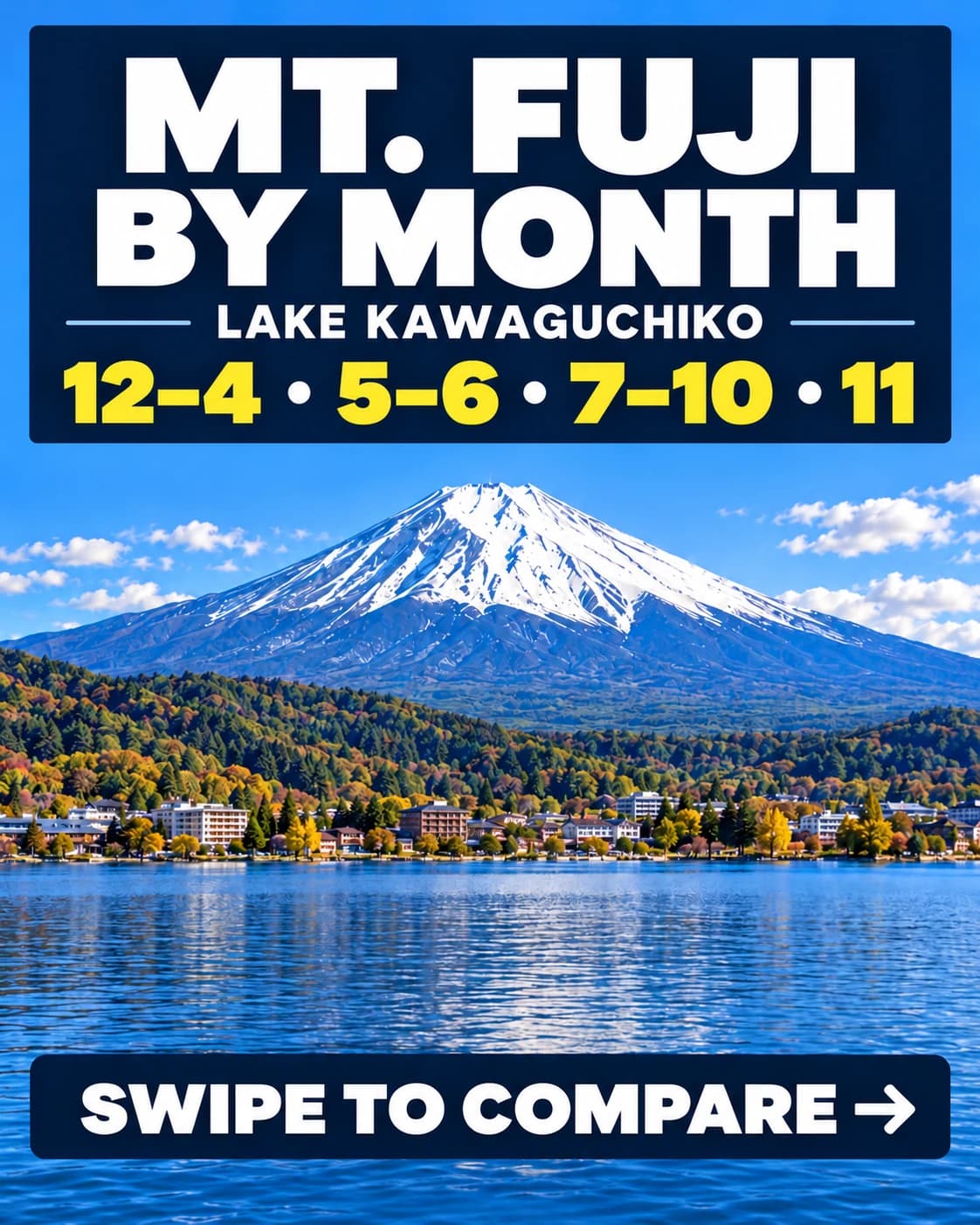

1 / 6 · Overview
AI-generated illustrations, not photographs or live conditions. The images use English labels. Month ranges are approximate; snow cover and visibility vary by date and year.
When is Mount Fuji’s snow cap most beautiful?
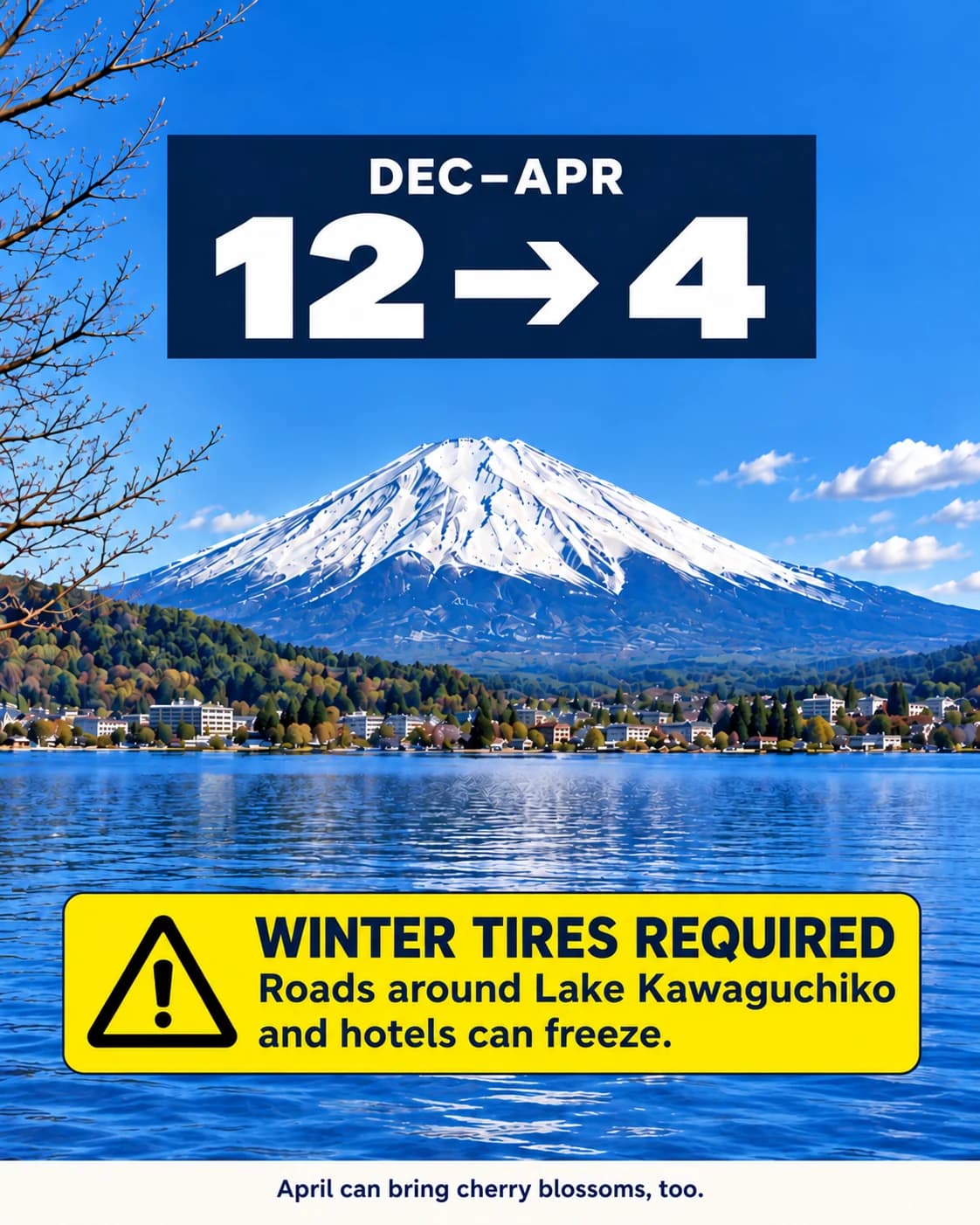
If a broad snow cap is your priority, December–April is a useful planning window. These month ranges describe the mountain’s appearance, rather than equal three-month seasons. Use the month numbers even if the seasons at home are different.
December–April
12 → 4
Broad snow cover
The familiar white summit; snow high on the mountain can still be thick in March and April.
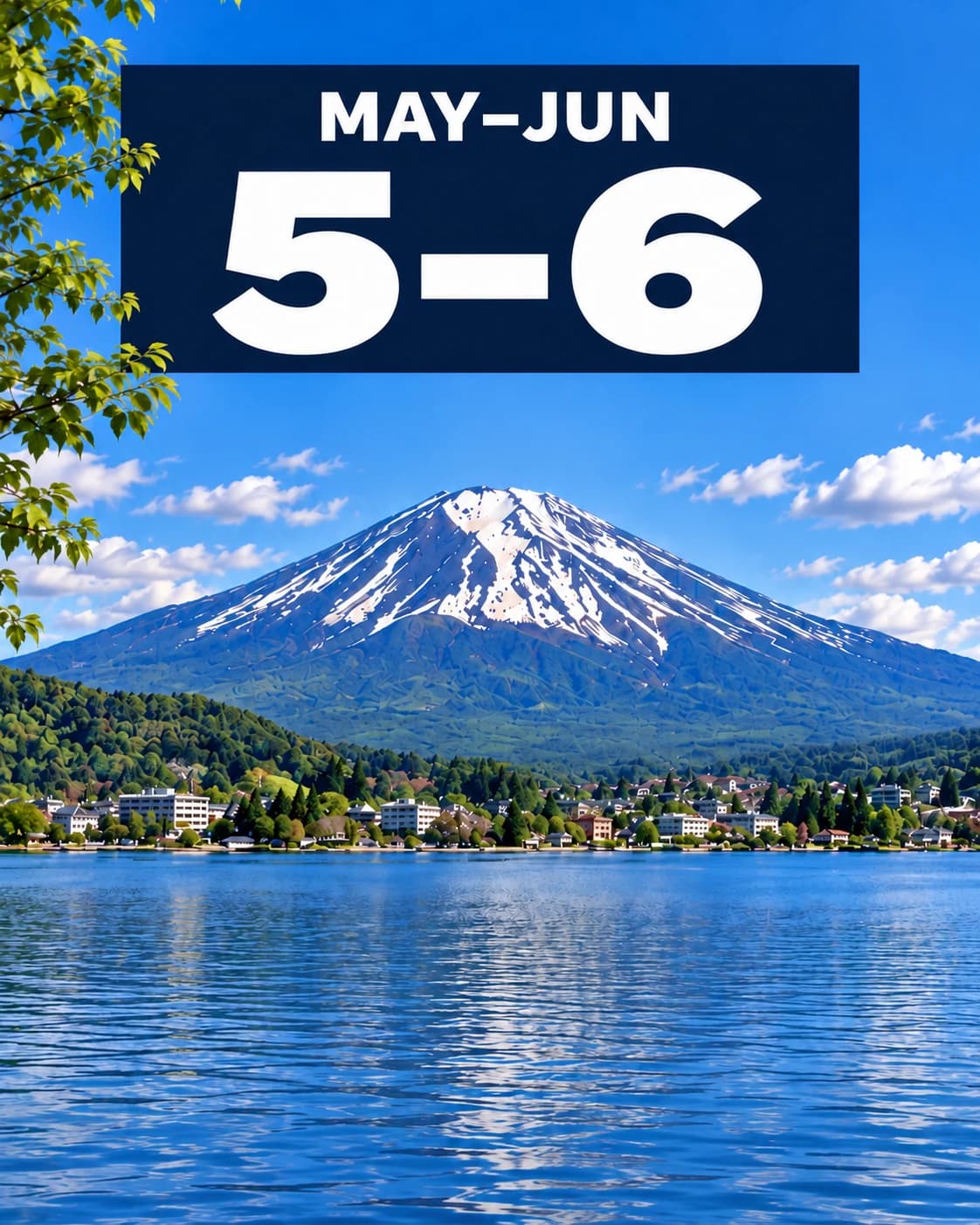
May–June
5–6
Snow melting
The cap retreats and exposed ridges emerge, with snow still possible on the upper slopes.
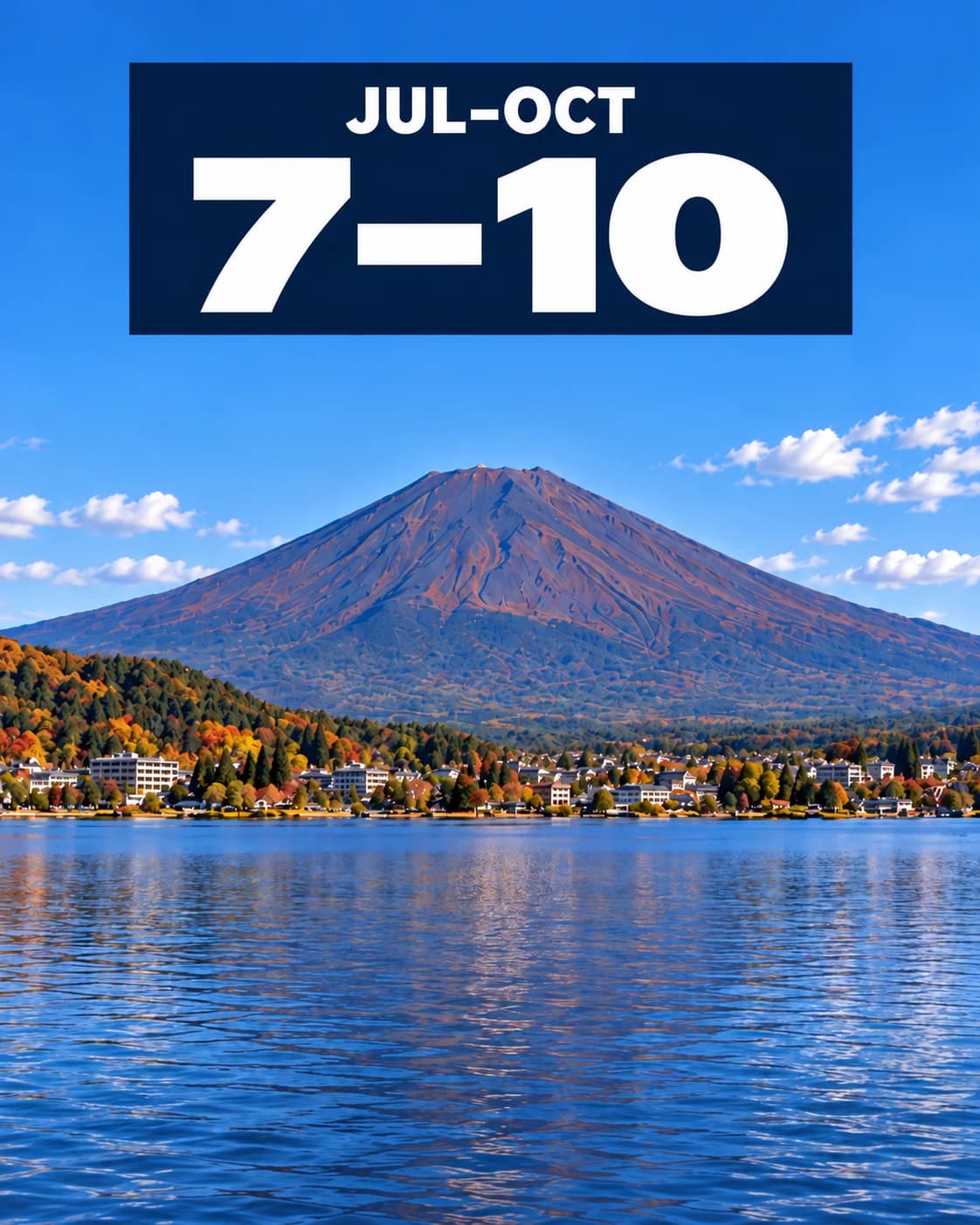
July–October
7–10
Mostly mountain slopes
More of the dark profile is visible. July residual snow and October fresh snow are possible.
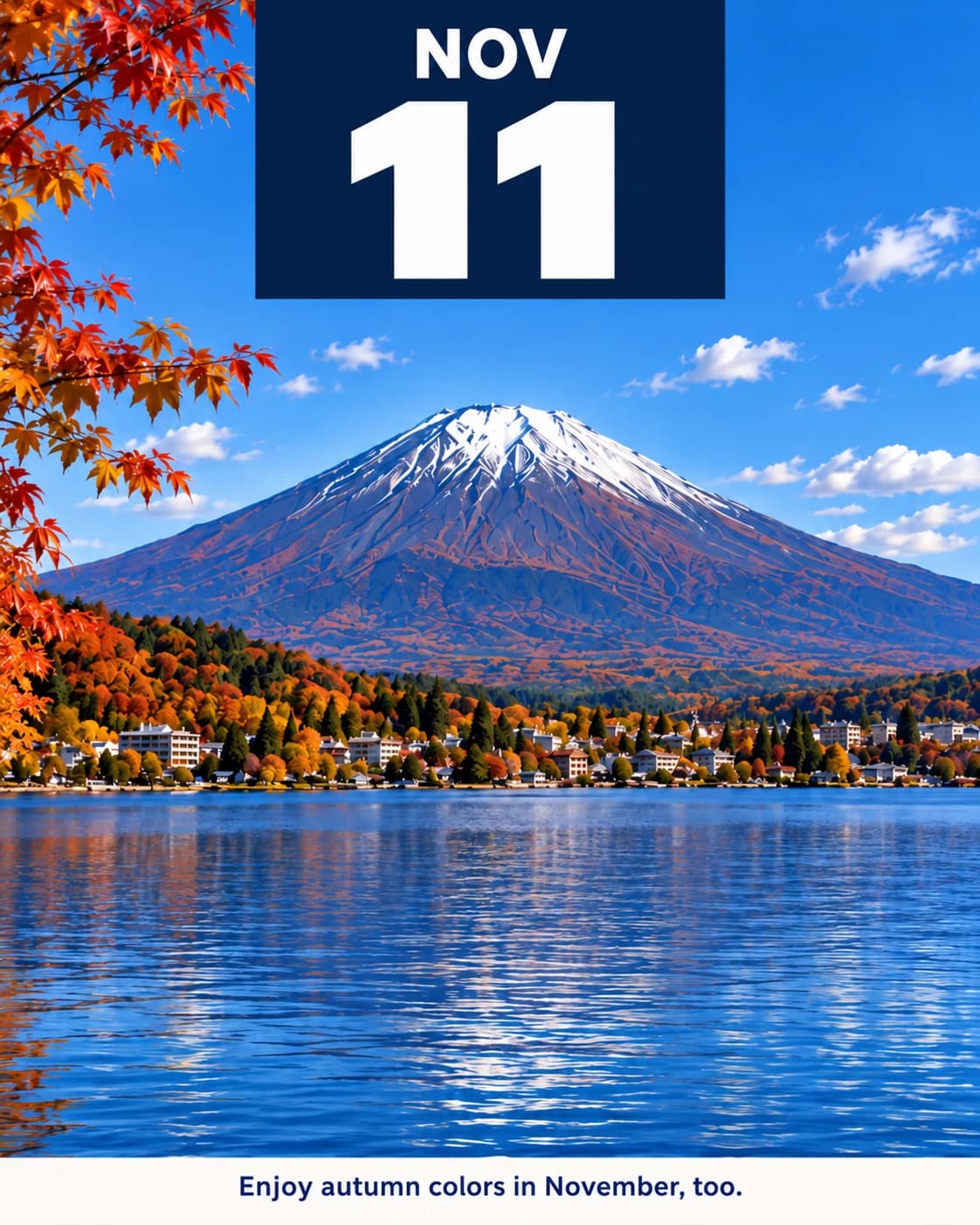
November
11
Snow returning
A transition toward a snow cap; timing and the extent of the new snow vary each year.
A first snow covering is not the start of a permanent snow cap. The Japan Meteorological Agency’s Kofu records list November 7, 2024 and October 23, 2025 as the first observed snow-cover dates. The difference is a reminder to check current conditions, rather than expect snow on a fixed date.
Mount Fuji snow by month: January to December
These are approximate viewing expectations from the Kawaguchiko area, not a snow-depth forecast. Snowfall, melting, wind and your viewing angle can all change how much white snow you see.
January
Broad snow cover
A good month to plan for the classic white summit. Allow for snow and ice on local roads.
February
Broad snow cover
The snowy mountain remains a highlight. A clear day can still have icy roads around the lake.
March
Broad snow cover
Spring at the lake does not mean a bare summit. Cold spells and road ice are still possible.
April
Often still thick snow
Snow can remain extensive high on the mountain, while cherry blossoms may bloom around the lake. Bloom dates vary; keep checking the forecast.
May
Snow is melting
Snow often remains on the upper slopes while darker ridges become more visible. Weather can change quickly.
June
A retreating snow cap
Remaining snow becomes more patchy. Rain and cloud can hide the summit, so keep your viewing plans flexible.
July
Mostly exposed slopes; residual snow possible
Do not assume the mountain is completely snow-free. The official climbing site notes that remaining snow can delay July trail openings.
August
Mostly exposed slopes
Expect a darker mountain silhouette rather than a broad white cap. Haze and cloud may limit the view.
September
Mostly exposed slopes
A useful month for the mountain’s bare profile. Conditions can change from one day to the next.
October
Exposed slopes; fresh snow possible
The first dusting may arrive, then melt again. A lasting white cap is not assured by an October travel date.
November
Snow returns in transition
A returning snow cap can pair with autumn colors around the lake. Snow cover and foliage timing vary; a broad white cap is not assured.
December
Broad snow cover becomes more typical
Plan for a snowy summit and winter driving conditions. Weather still decides whether the mountain is visible.
July snow is not just a visual detail: the official Mount Fuji climbing website notes that residual snow can delay trail openings. This article is for views from the lakeside; use official route information if you plan to climb.
Kawaguchiko Mount Fuji visibility: give yourself a morning chance
Try early, stay flexible
Early morning is a practical first opportunity before cloud or haze develops. It can also be cloudy from sunrise, and the view may improve later. Do not treat a sunny forecast for the town as a promise that the summit will be clear.
If seeing Fuji is the main reason for your visit, an overnight stay can give you another morning to try. Plan a café, museum or lakeside stop for times when the mountain is hidden.
Check the view before you set off
Look at a current camera aimed toward Fuji, the local forecast and road information. Conditions at the lake and on the mountain can differ, and clouds can change quickly.
Check Yamanashi’s Fuji live camerasWhere to look: Lake Kawaguchiko’s north shore
From the north shore, look south across the lake toward Mount Fuji. Oishi Park and the Nagasaki area are useful places to consider for the lake-and-mountain composition. The town’s official viewpoint guide can help you choose a lakeside stop.
Park in a designated space and continue on foot where permitted. Do not stop in a traffic lane for a photograph. Wind can disturb reflections, and cloud can hide Fuji even when the lake itself is bright.
April can bring cherry blossoms along the lakeside, while November can add autumn colors to a Fuji view. Bloom and foliage timing vary with the year and location, so check local updates rather than rely on a fixed peak date.
A snowy summit comes with winter road planning
During December–April, snow or ice can affect roads around Lake Kawaguchiko and your hotel, not only roads high on the mountain. Winter tires are essential for snow or ice; the month range is a planning warning, not a blanket legal rule for every day. Keep checking the forecast into April and May. Our local experience includes rare snowfall around Golden Week in late April or early May.
Winter tires are not fitted to every vehicle. Vehicles marked with the snow-tire badge in your dated search results include them at no extra charge. If your visit is near a seasonal change, contact our team about your dates and route.
Winter tires do not remove the risk of slipping. The Yamanashi Police winter road advice highlights bridges and shaded roads: slow down, leave space and follow current restrictions.
Mount Fuji viewing questions
When is the best time to see Mount Fuji with snow?
For the classic snow-capped view from Kawaguchiko, December through April is a useful planning window. March and April can still have extensive snow on the upper slopes. Snow cover and visibility vary by date, year and weather; no month guarantees a clear view.
Does Mount Fuji have snow in July or October?
July through October usually shows more exposed mountain slopes, but remaining snow is possible in July and fresh snow can arrive in October. The first snow covering does not mean that a lasting snow cap has formed.
What time of day should I try to see Mount Fuji from Kawaguchiko?
Try an early morning viewing opportunity, and check a current live camera and the local forecast before setting out. Cloud and haze can develop or clear during the day. Morning is a practical starting point, not a visibility guarantee; allow another chance if your schedule permits.
Are winter tires included with Fuji Premium Car Rental?
Winter tires are not fitted to every vehicle. Vehicles marked with the snow-tire badge in your dated search results include them at no extra charge. For travel around the change of seasons, contact the team about your dates and route. Always check current road conditions and restrictions before driving.
Make room for your Fuji view
Choose your month, check the day’s weather, and plan a lakeside route that leaves time to stop. Start with our Kawaguchiko pickup guide, then choose your dates in the existing booking flow.