
Kawaguchiko travel guide
Do You Need a Car in Kawaguchiko, or Is a Bicycle Enough?
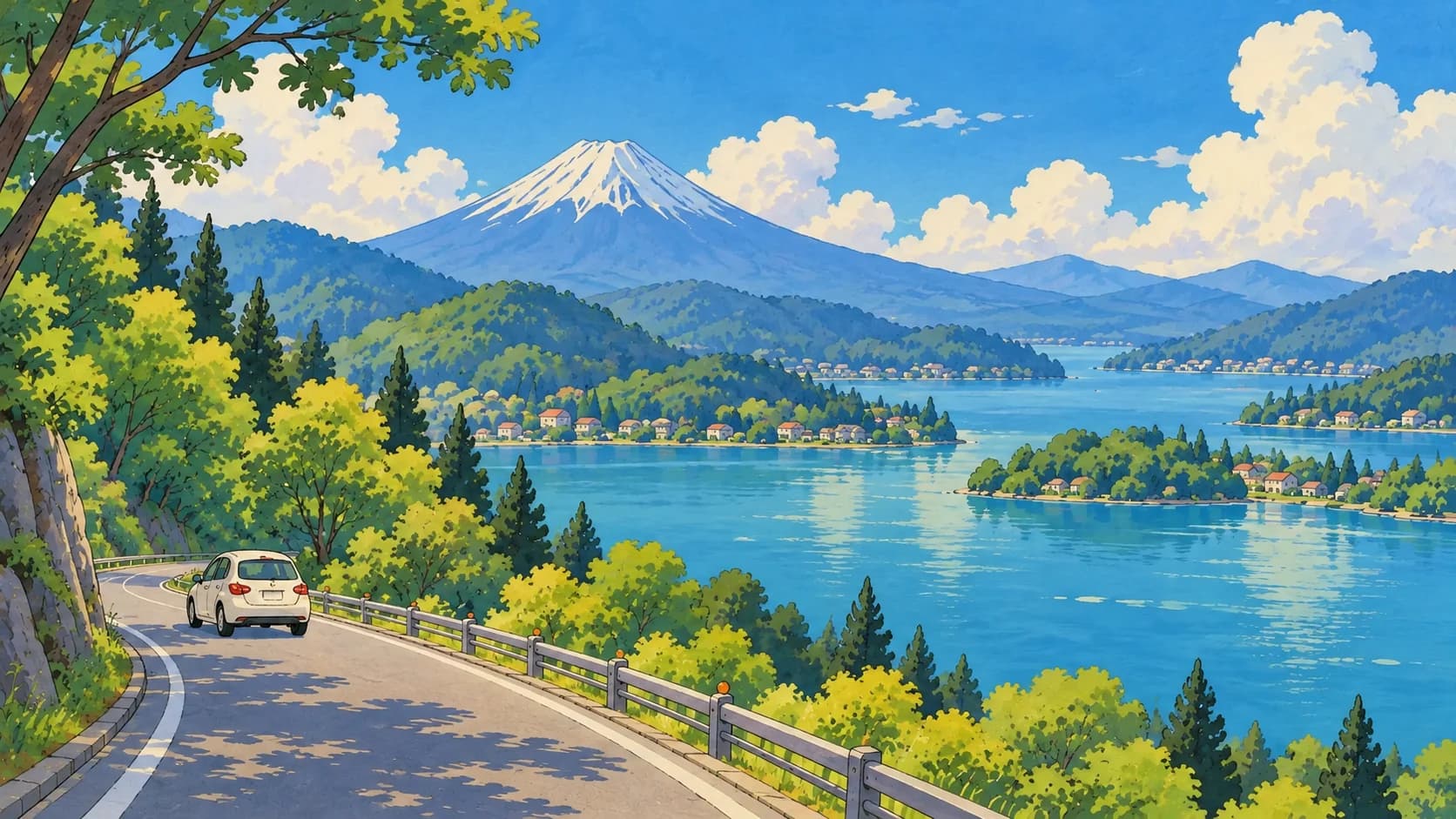
To sightsee across several lakes or reach dispersed attractions, rent a car. The area is more spread out than many visitors expect, and the roads between the lakes climb, so a casual bicycle plan limits a day that links Kawaguchiko with Saiko, Shojiko and Motosuko, or with Oshino Hakkai and Yamanakako. For a short ride along the flat Kawaguchiko shore, a bicycle is enough.
If your trip combines several lakes, villages, viewpoints and hotel transfers, rent a car. This matters most if your time is limited or you are travelling with children or bags. The rest of this guide explains why, and where a bike or a bus still makes sense.
Renting a bicycle in Kawaguchiko is a pleasant way to spend a few hours by the lake, and for a relaxed shoreline ride it works well. It works less well if you also want to see the western lakes, visit Oshino Hakkai, or move luggage between your hotel and the sights.
Why the Fuji Five Lakes area is easy to underestimate
From the town centre, Kawaguchiko can look like a compact resort beside one lake. The Fuji Five Lakes region is much wider, stretching along the northern foot of Mount Fuji. Kawaguchiko sits in the middle, three smaller lakes lie to the west, and Yamanakako lies to the east. Many of the places people come to see, from quieter shorelines to spring-fed villages, are well outside the walkable centre.
The lakes also sit at different levels. The regional authority lists the surface of Kawaguchiko at 833 metres, Saiko, Shojiko and Motosuko at 900 metres, and Yamanakako at 980 metres. These figures describe the lakes themselves, not the roads between them, but they show that getting from one lake to the next means more than following one flat shoreline.
How the official cycling routes are graded
The Fujikyu railway's cycling guide draws the distinction clearly. It rates the Kawaguchiko loop as a beginner route, a gentle and largely flat ride. Add Saiko to the same outing and the rating rises to intermediate, because the route has ups and downs. A circuit of all five lakes is rated advanced and calls for stamina over a long distance.
These grades come from a local operator that encourages cycling, which makes them a fair guide for planning. A comfortable ride along one lake and a day spent travelling between lakes are different undertakings. Someone who cycles now and then at home may enjoy the first and find the second takes far more of the day, and their energy, than they expected.
What an e-bike solves, and what it leaves
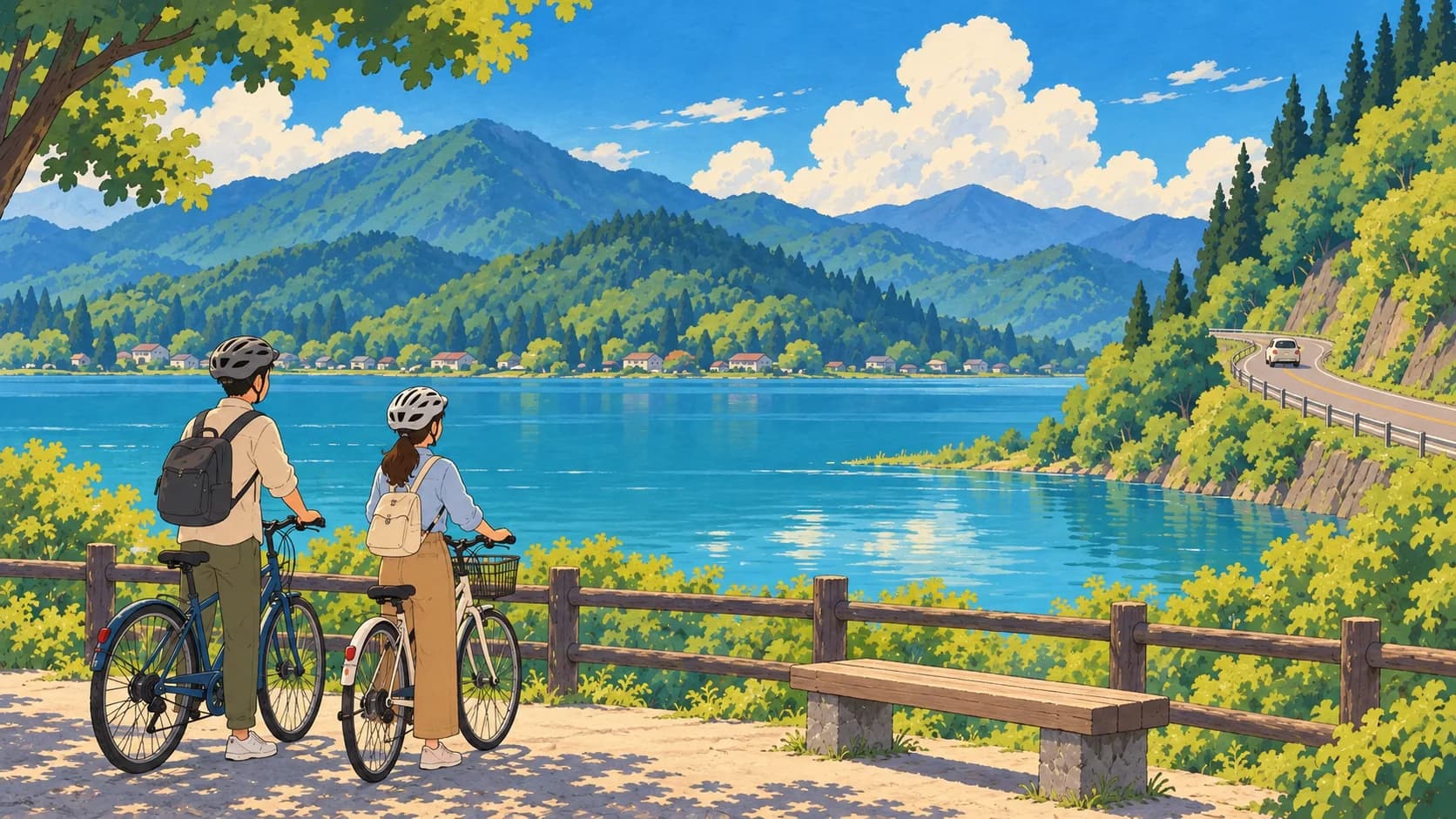
An electric-assist bicycle makes climbs much easier, so more riders can manage an intermediate route. The distance stays the same, though. You still cover every stretch between lakes at bicycle speed, exposed to whatever the weather brings, and you still have to get the bike back in time. Check the return location and deadline with the rental provider before you set off.
Battery range depends on the model, the rider, the load and the hills. Ask the shop what to expect and choose a turnaround point that leaves a margin. If the battery runs low far from the return point, you will be pedalling a heavier bike on your own power.
Cycling as the activity, or cycling as transport
Start by deciding what the bicycle is for. If the ride is the experience you want, a morning around Lake Kawaguchiko with a stop at Oishi Park on the north shore is a pleasant way to spend time, and a car adds little to that.
If the bicycle is simply how you plan to reach several sights, the calculation changes. Each extra lake adds riding time, and that time comes out of the hours you could spend walking a shoreline, eating lunch or waiting for Mount Fuji to clear. With a car you spend the transfers sitting down and save your energy for the sights themselves. Many viewpoints still involve parking and walking, so plan for time on foot either way.
Weather, luggage and travel companions
Several practical factors can tip the decision further towards a car. If the forecast for your day is unsettled, a bike leaves you exposed for every stretch between stops, while a car lets you adjust the plan without riding through it.
Luggage matters too. If you are changing hotels, or staying somewhere away from the station area, a car makes moving bags between your accommodation and the day's sights far simpler. Travelling with children, older relatives or anyone who rarely cycles is another strong reason, since an intermediate route asks everyone in the group to manage the climbs.
Two day plans to choose between
A car makes it practical to build a day around one direction from Kawaguchiko. Treat the two options below as alternatives: trying to cover both in one day tends to turn sightseeing into a series of transfers. Travel time depends on traffic, parking and how long you stay at each stop, so leave slack in the schedule.
- Western lakes: begin at Oishi Park on Kawaguchiko's north shore, then continue to Saiko, Shojiko and Motosuko, choosing your stops according to the weather and the view of Mount Fuji.
- Eastern outing: head to Oshino Hakkai and its spring-fed ponds, then on to Yamanakako, the highest of the five lakes.
Where sightseeing buses fit in
Fujikyu runs sightseeing buses serving Kawaguchiko, Saiko, and Shojiko and Motosuko, along with the Fujikko service, so a car-free trip is possible. If you travel light and don't mind planning around stops, the bus is a reasonable choice. Check the current timetable for the specific stops you need, because departure times will shape your day.
A car's main advantage is control. You decide the order of stops, when to leave, and whether to stay longer if the mountain comes out. That does not guarantee faster travel, an empty car park or a clear view of Fuji, but it does let you change your plans as the day unfolds.
Frequently asked questions
Do I need a rental car to visit Kawaguchiko?
Not for the shoreline around Lake Kawaguchiko itself. A car becomes the practical choice when you want to combine several lakes, villages or viewpoints, move between hotels, or travel with family or luggage on a limited schedule.
Is a bicycle enough for sightseeing around the Fuji Five Lakes?
For the Kawaguchiko loop, yes. The local railway rates it as a beginner route. It rates the combined Kawaguchiko and Saiko loop as intermediate, with ups and downs, and the full five-lake circuit as advanced. A bike suits a leisurely ride better than a day of sightseeing across several lakes.
Does an electric bicycle solve the hills?
It helps a great deal on climbs, but the distance, the weather and the ride back remain. Ask the rental provider about battery range for your planned route, confirm the return location and deadline, and turn back with time and charge to spare.
Can I use buses instead of a car?
Yes. Fujikyu operates sightseeing buses covering Kawaguchiko, Saiko, Shojiko and Motosuko, plus the Fujikko service. Check the current timetable for your stops. A car mainly gives you more freedom over the order of stops and when you leave.
Rent a car from our Kawaguchiko shop
Fuji Premium Car Rental's Kawaguchiko shop is a convenient starting point for a day on the western lakes or the Oshino and Yamanakako side. Check which vehicles are available for your travel dates, and read the pickup checklist before you arrive.
Check vehicles and availability